Each model below was produced by pointing SysML Repo Modeler at a public repository and letting it read the code. The tool writes a SysML v2 model of the components it finds, the interfaces they expose, and the connections between them. Open one and explore it — the graph, the drill-downs and the generated source are the real output, not screenshots of it.
These are machine-generated models of large codebases, regenerated against pinned commits and checked against their runtime and deployment sources. They are architecture views, not complete specifications.
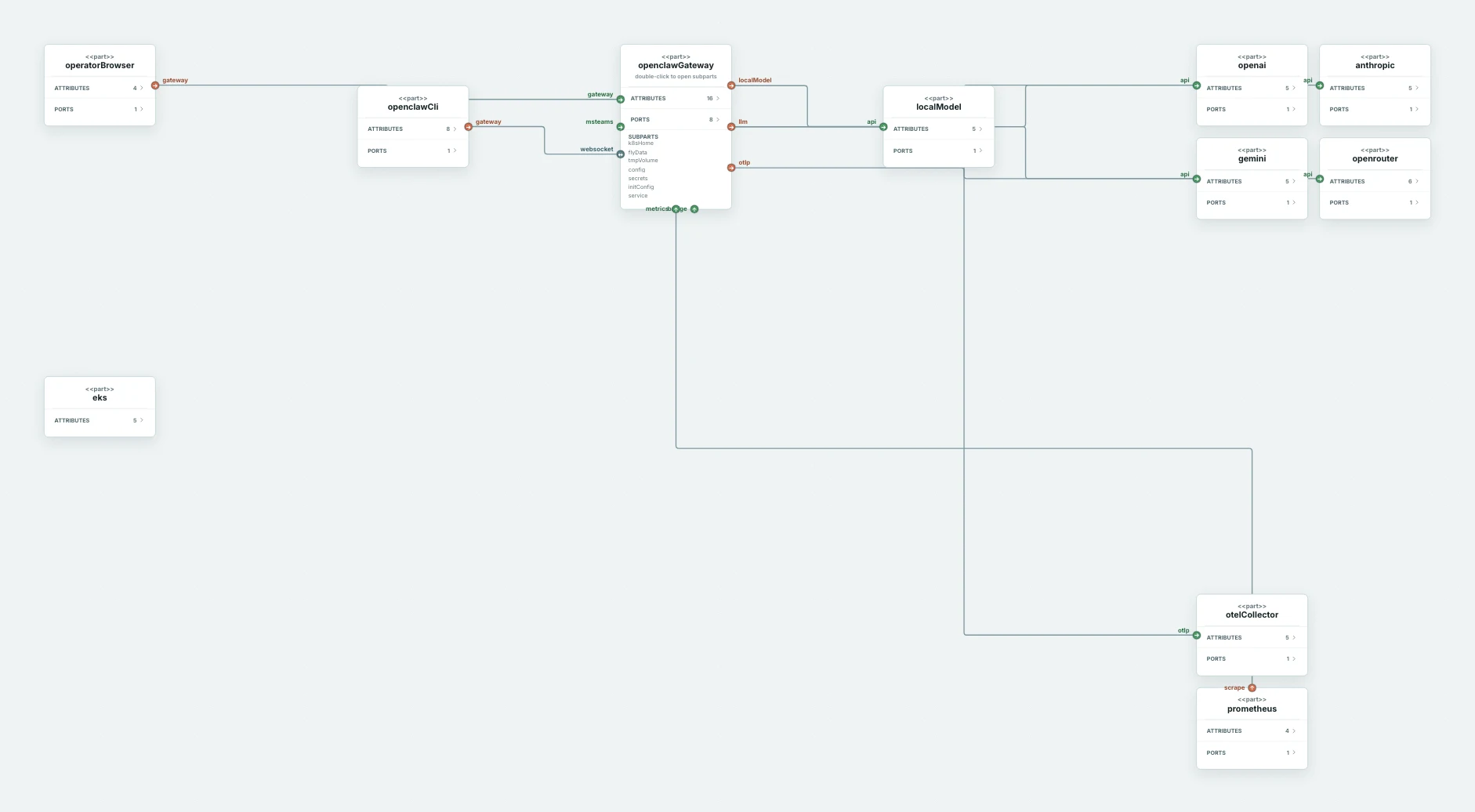
OpenClaw went from a side project to one of the most-starred repositories on GitHub in under a year. It is a single repository, but not a simple one: an agent runtime, a gateway, a plugin system and a set of channel integrations all live together in it. That makes it a test of whether the analyzer can find structure inside one large codebase rather than across several.
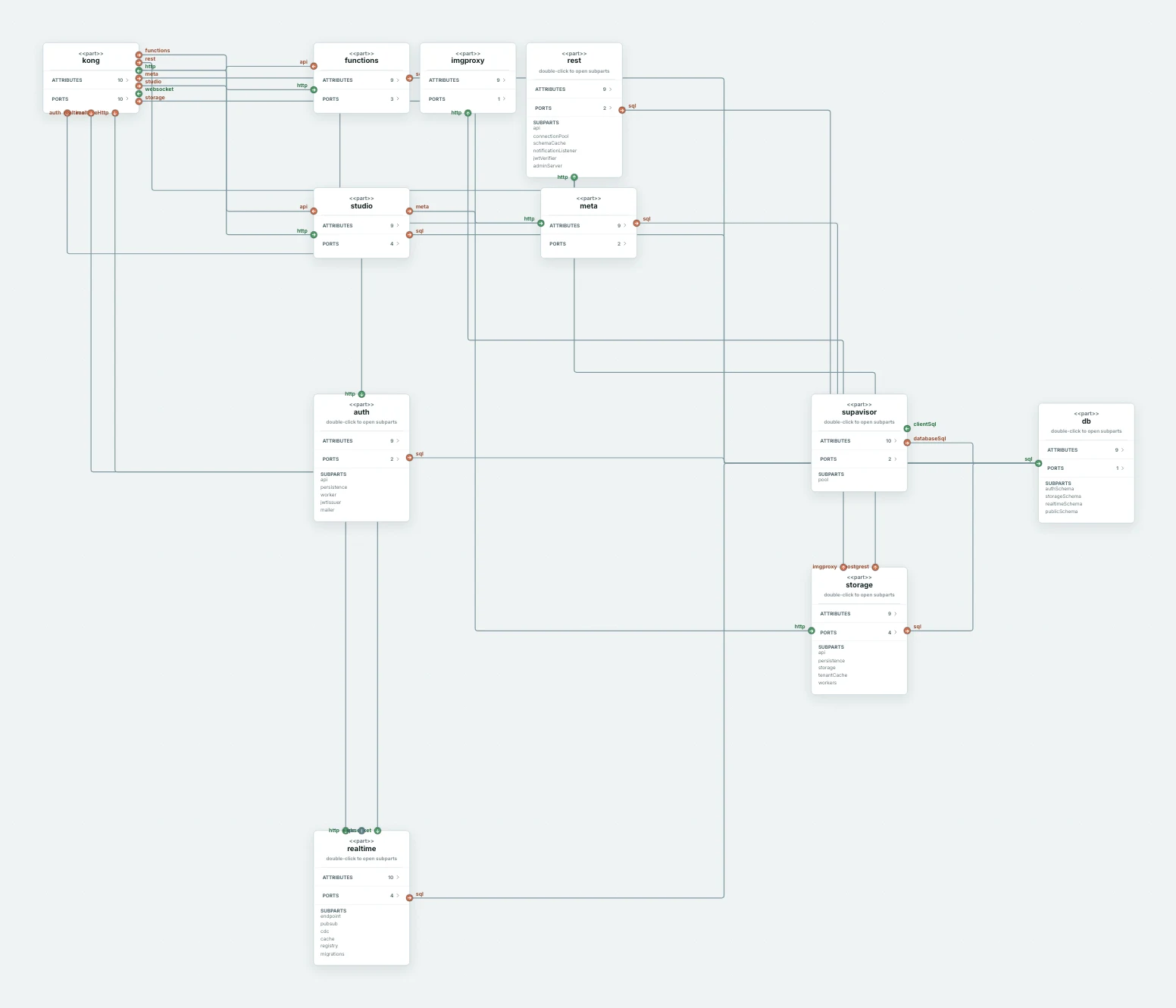
This is the case the analyzer was built for. Supabase is not one codebase — it is a Go auth service, a TypeScript storage API, an Elixir realtime server and a Haskell REST layer, developed in separate repositories and run as one platform. No single repository contains that picture.
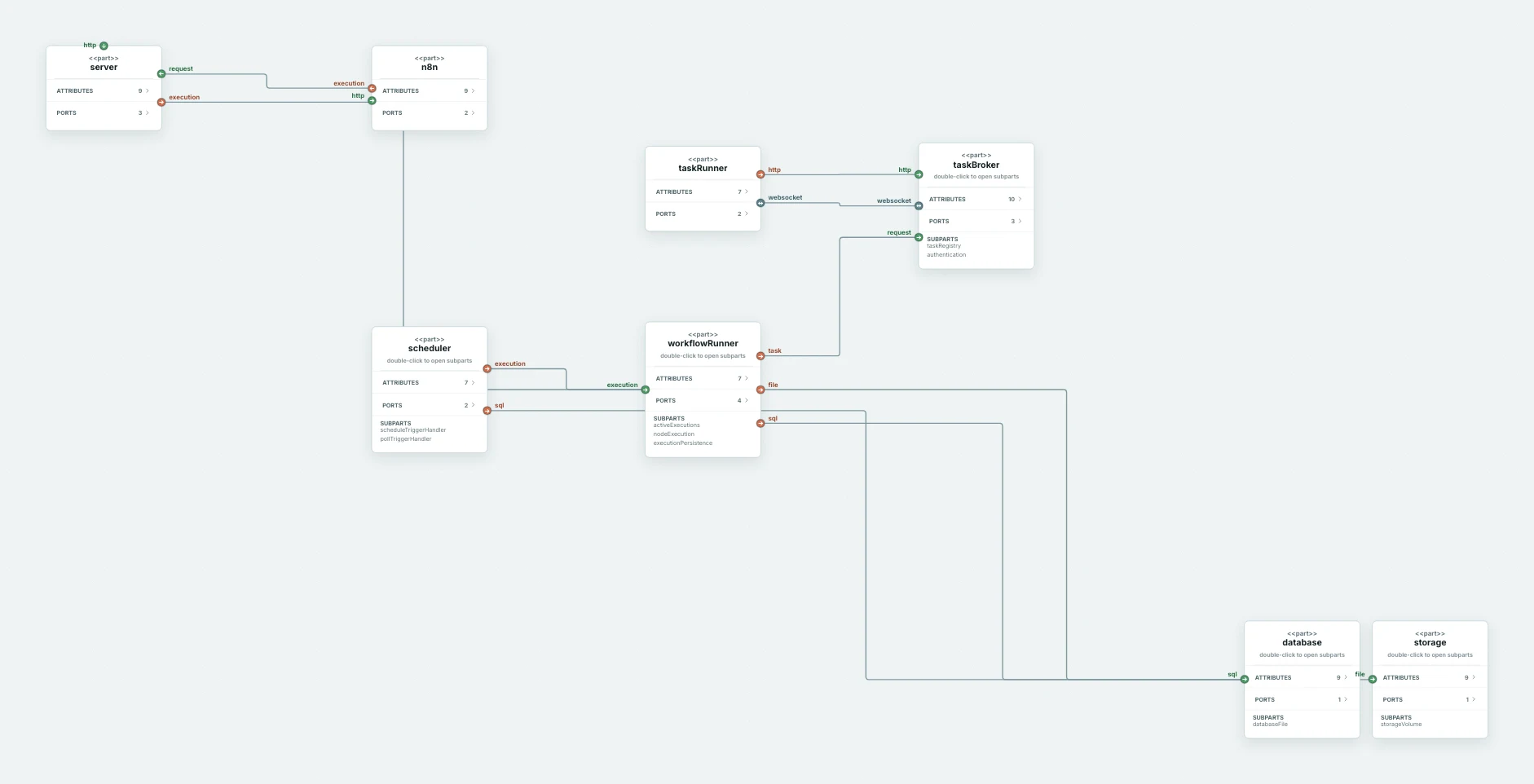
One standalone runtime, separated by responsibility
n8n supports several operating modes, which makes it easy to draw an architecture that never actually runs. This model fixes its scope to the default standalone Docker service: regular execution mode, SQLite persistence, filesystem binary storage and the internal task runners.
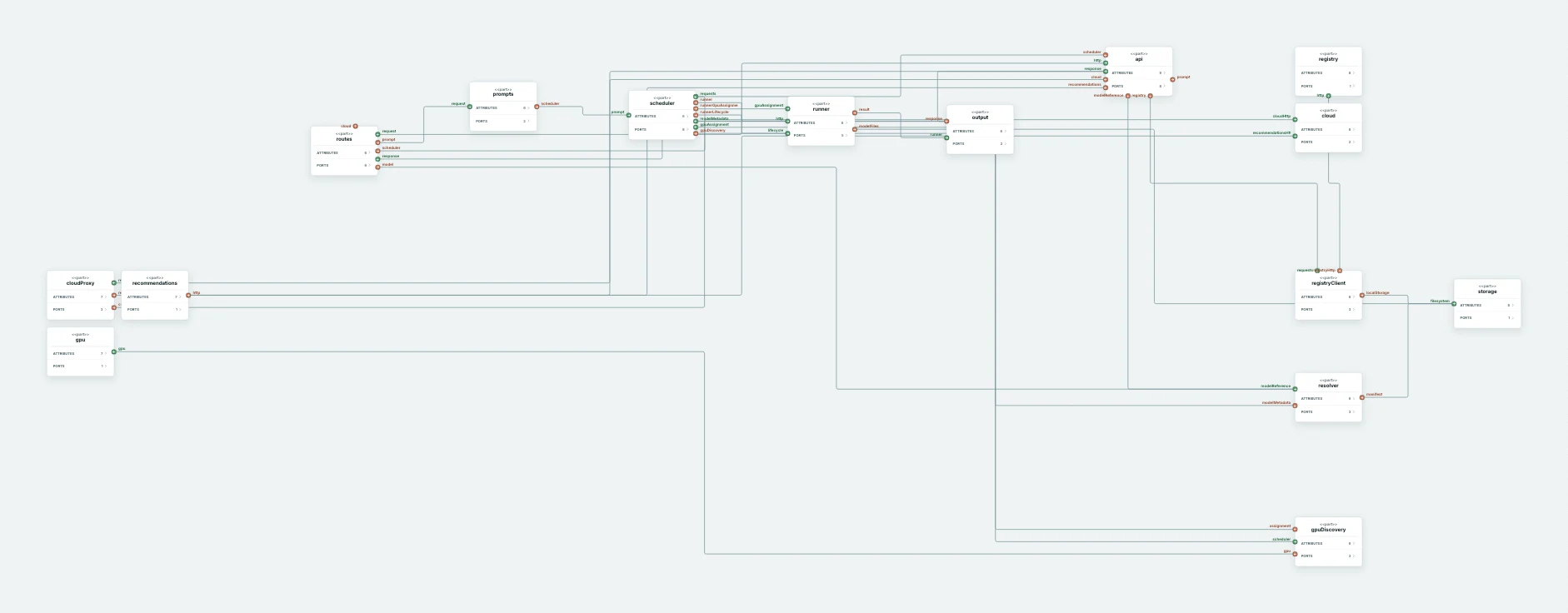
Architecture tooling is usually shown off on web apps, where the structure is conventional and easy to guess. Ollama is a Go runtime that manages model files, schedules GPU memory and serves inference — code where a wrong guess shows. It is here as a check against output that merely looks plausible.
SysML Repo Modeler runs as a Docker Compose stack on your own machine, so your source and the models built from it stay where they are. Point it at your repositories, scan, and you get the same views you see here.